
Did you know the human body has over 650 skeletal muscles, but some estimates say there are as many as 840.
Choose from our curated list of muscles (ones your able to work out while exercising)
Core
Core muscles are the muscles in your abdomen, back, and pelvis that support your trunk and stabilize your body. They're also known as postural muscles.
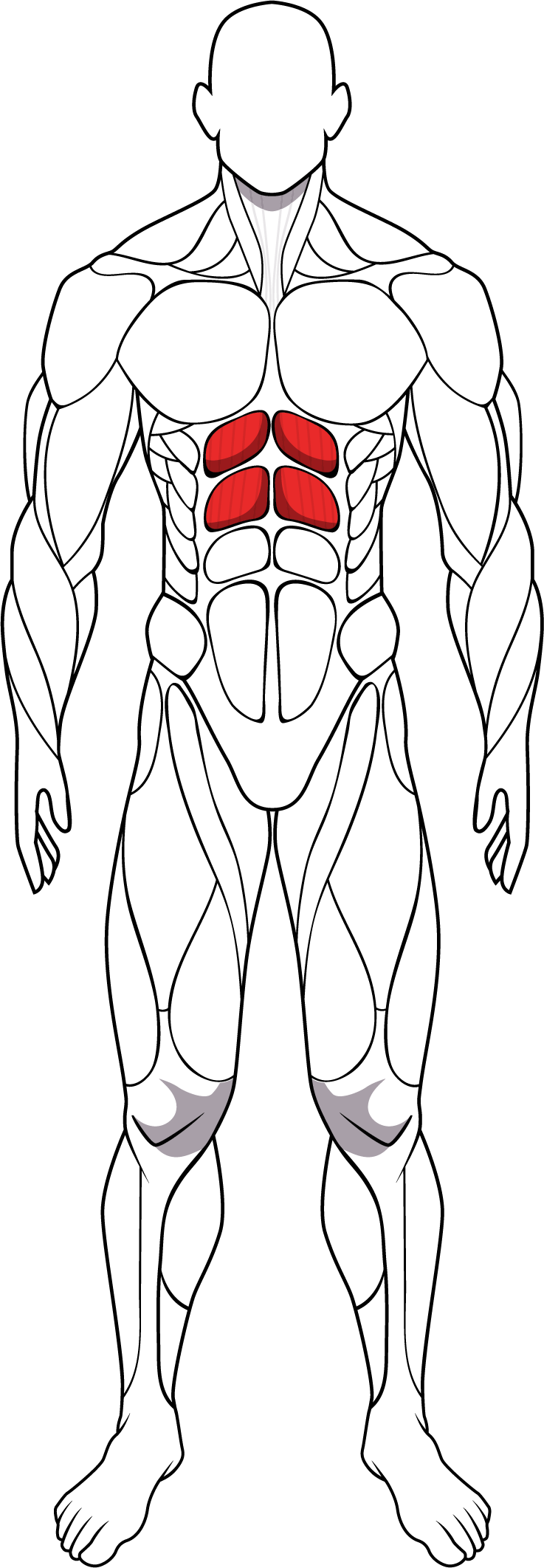
The "abs," short for abdominal muscles, are a group of muscles located in the front and sides of the torso. They play a crucial role in stabilizing the spine, supporting posture, and facilitating various movements of the trunk. The abdominal muscles are divided into several distinct muscles, each with its own function and anatomical location: Rectus Abdominis: The rectus abdominis is a long, fl...
Read more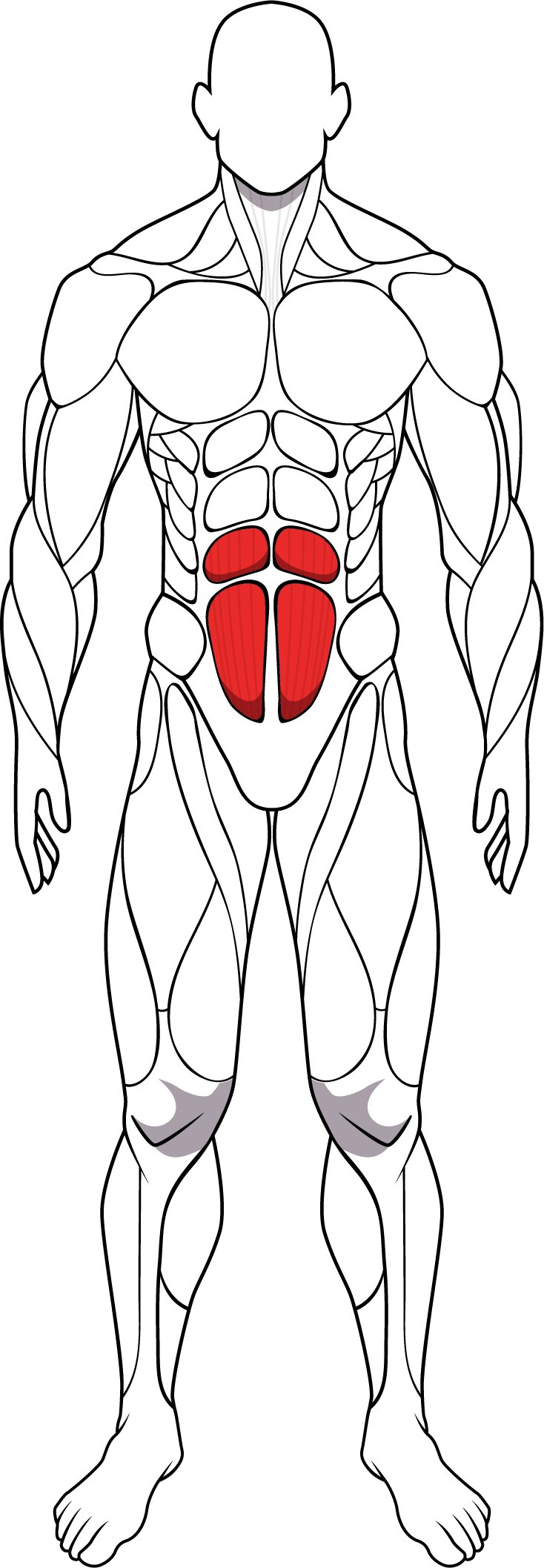
The Abs Lower muscle, also known as the lower rectus abdominis, is a muscle located in the lower portion of the abdomen. It is responsible for flexing the lumbar spine and pelvis, helping to support the lower back and facilitate movements such as bending forward or sitting up from a lying position. Strengthening the Abs Lower muscle can improve core stability, posture, and help alleviate lower bac...
Read more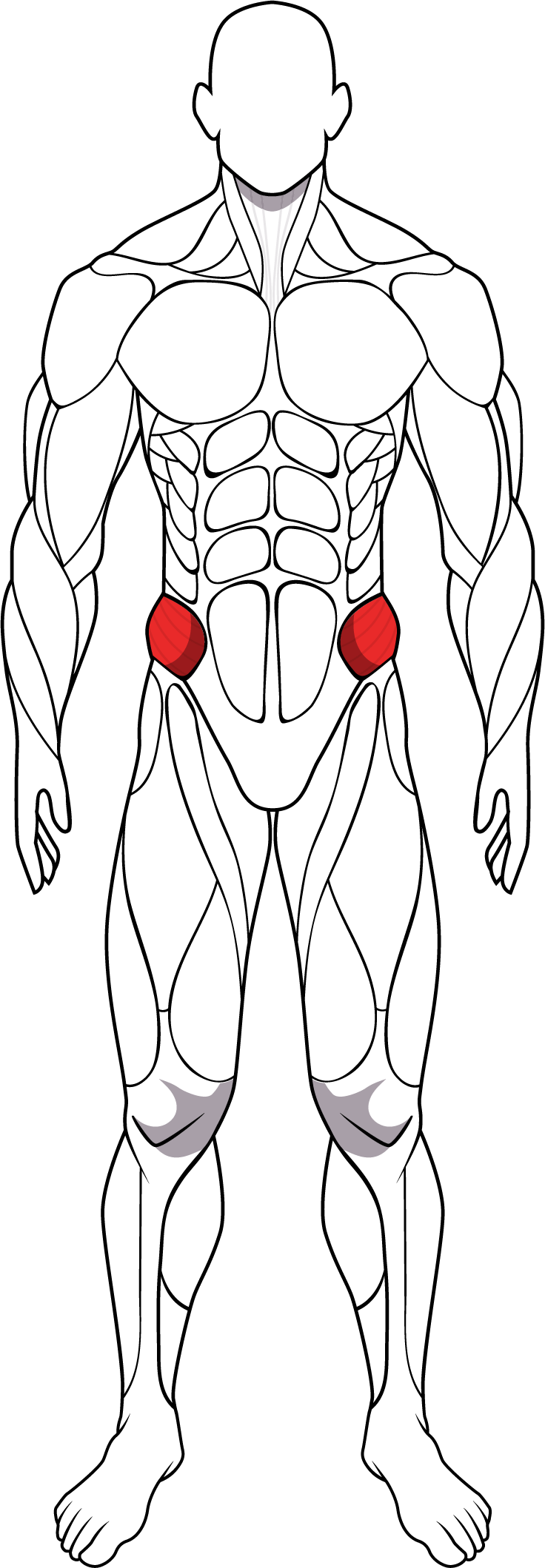
The obliques are abdominal muscles located on the sides of the torso. They consist of two sets: the external obliques, which run diagonally from the lower ribs to the pelvis, and the internal obliques, which run perpendicular to the external obliques. The obliques help with trunk rotation, lateral flexion, and stabilization of the spine. They are crucial for proper posture, spinal alignment, and o...
Read more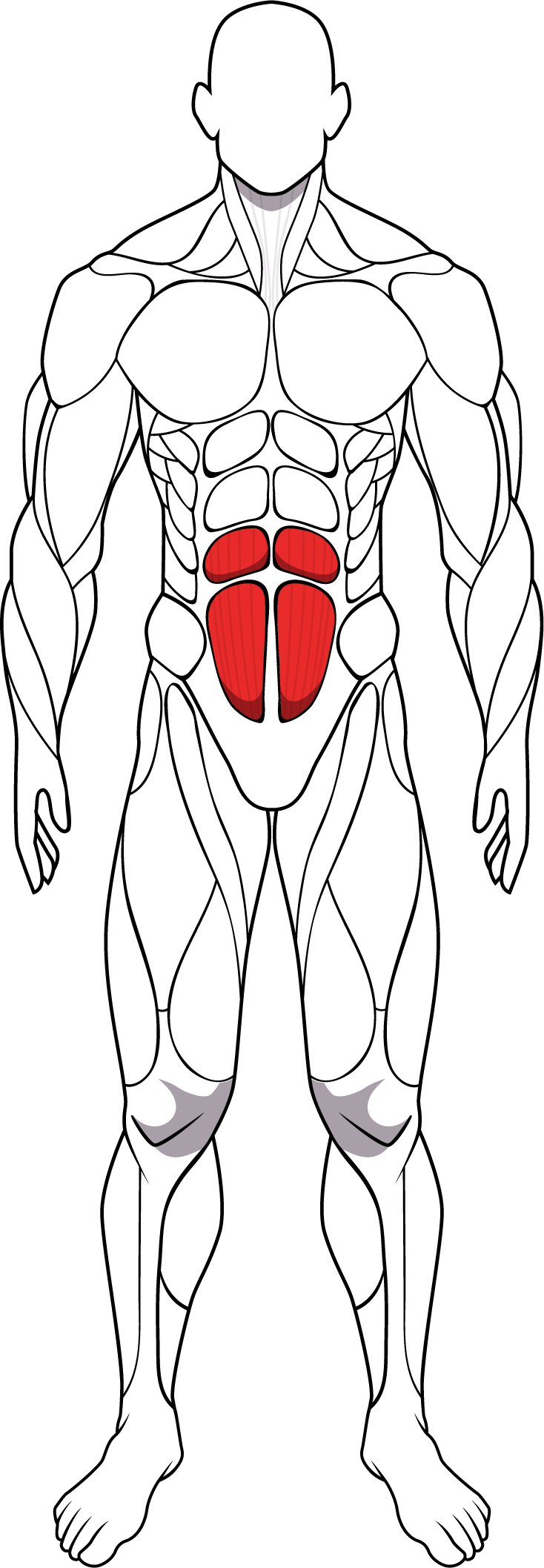
The transverse abdominis muscle is a deep muscle located in the abdomen that acts like a corset, supporting the internal organs and stabilizing the spine. It is responsible for maintaining core stability, protecting the lower back, and assisting in breathing and maintaining posture. Strengthening this muscle can help improve overall core strength, prevent back pain, and support proper alignment du...
Read more